
How does the education system work in Uganda?
Education for children in Uganda is divided into primary and secondary school. Completing primary and secondary school takes a total of 13 years. Uganda has both public and private schools. The typical exam performance and literacy outcomes of private schools is substantially higher than public schools.
Looking specifically at the primary education system, students must attend for seven years. Since the launch of the Universal Primary Education (UPE) program in 1997, primary education has been free. The implementation of the UPE program was extremely popular because it allowed millions of children access to primary school who previously could not afford it. The primary school enrollment rate has since risen significantly and is now over 90%.
After finishing primary school, the secondary education system in Ugandan requires students to attend school for six more years. The first four years of secondary school are called “lower secondary school” and the latter two are called “upper secondary school.” Students finishing lower secondary school can write the national “O” level examinations. Successfully completing the “O” level examination allows students to attend a Primary Teacher College, Technical Institute or apprenticeship in the private sector. If students proceed to upper secondary school, they undergo two more years of education and can write the “A” level exams. Depending on the results of the A level exams, student’s can apply to enter university, teacher training colleges, technical training or tertiary institutions.
What are the barriers for accessing education in Uganda?
Many Ugandan students continue to face significant barriers in accessing education. These challenges vary depending on factors such as gender, region and level of education. The most common barriers are a lack of affordable or quality education and poverty-related issues.
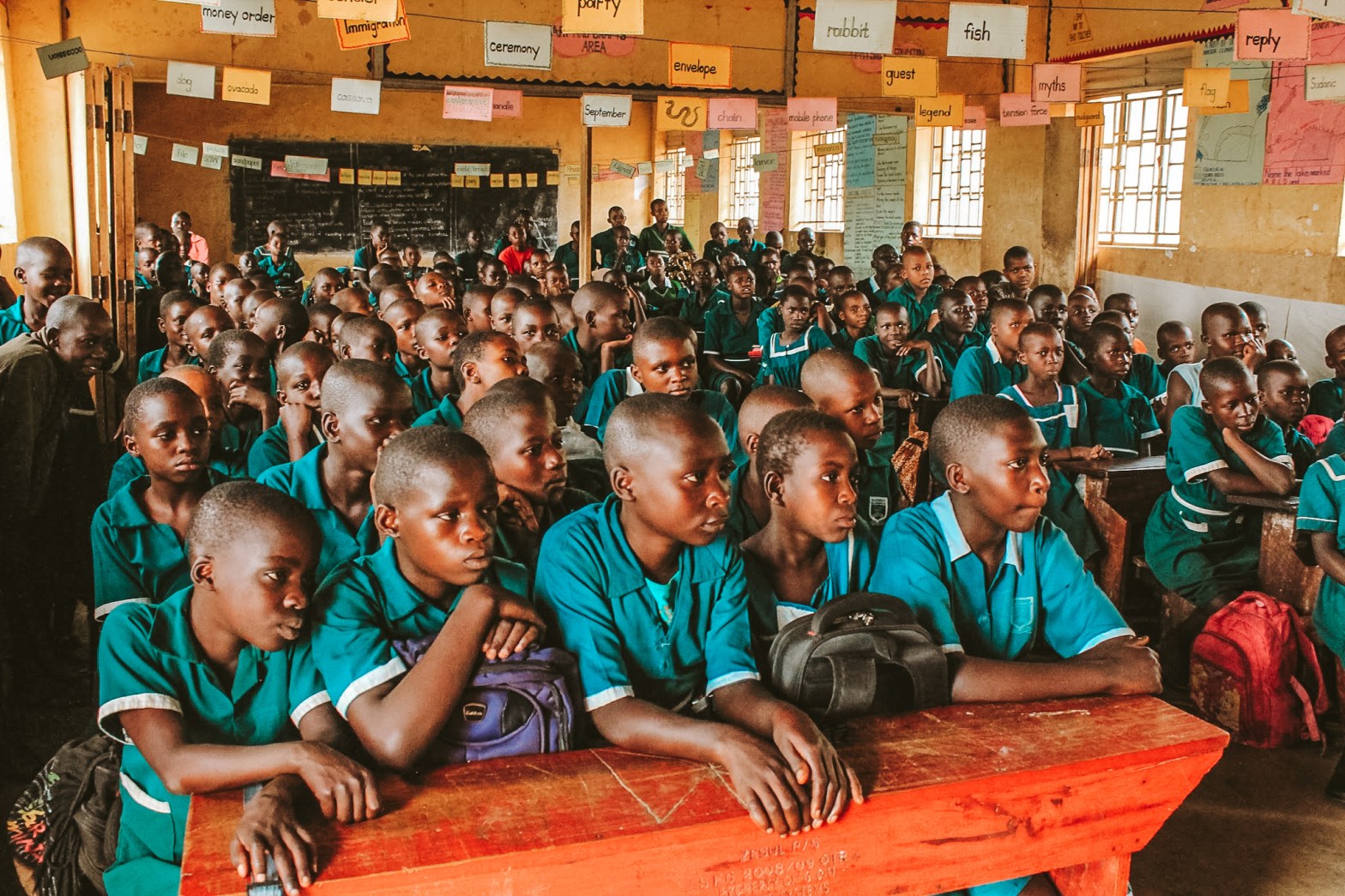
In primary schools, the major issue is the quality of education. Since the implementation of the UPE program, there are millions of more children in Uganda attending primary school. Despite this increase of children attending primary school, there has not been substantial improvements in the literacy rates of children. This is because an increased number of students has resulted in large class sizes and a shortage of quality teachers and educational resources. Many scholars and educations experts have acknowledged this problem and argue that the main challenge for primary education facing many African nations is not a lack of enrollment but a lack of quality in the already existing schools.[1]
Other problems facing primary students are related to a lack of affordable schooling as well as poverty. Despite a guarantee of free primary school, the United Nations has reported that more than half of Ugandan children drop out before finishing all seven grades of primary school.[2] Students often drop out because they cannot afford hidden educational costs, such as school uniforms, scholastic materials and meal programs. Additional barriers to finishing primary school face many Ugandan girls, especially in less-developed regions of the country. These include challenges of child pregnancy, a lack of menstrual hygiene products and child marriage.[3]
There are many similar barriers facing Ugandan students trying to access secondary school. A lack of affordability is especially problematic for secondary students, with a typical secondary school costing several hundred dollars per year. This makes secondary education far too expensive for most Ugandans, with many people living on a few dollars a day. As such, the primary school enrollment rate of over 90% plunges to less than 25% when students enter secondary school.[4]
[1] Dembele M. & Lefoka P. (2007) Pedagogical Renewal for Quality Universal Primary Education: Overview of Trends in Sub-Saharan Africa. International Review of Education 53, 531-553. DOI: 10.1007/s11159-007-9066-8
[2] UN Educational, Scientific and Cultural Organisation (Unesco) UNESCO (2012) Opportunities Lost: The Impact of Grade Repetition and Early School Leaving. UNESCO Institute for Statistics, Montreal at p.35. http://uis.unesco.org/sites/default/files/documents/opportunities-lost-the-impact-of-grade-repetition-and-early-school-leaving-en_0.pdf ISBN 978-92-9189-120-7
[3] Hasaba S. (2014) Women and Poverty Eradication Efforts in Uganda: Why is Ending Gendered Poverty Still Far-Fetched?. In: Falola T., Abidogun J. (eds) Education, Creativity, and Economic Empowerment in Africa. Palgrave Macmillan, New York. https://doi-org.ezproxy.library.ubc.ca/10.1057/9781137438508_4. ISBN 978-1-137-43849-2.
[4] Uganda Bureau of Statistics (2018) Primary School Enrolment, Completion Rate and Transition Rate to S.1 by Class and Sex (2013 – 2017). Government of Uganda. DOI: https://www.ubos.org/explore-statistics/21/
 Slum to Scholar